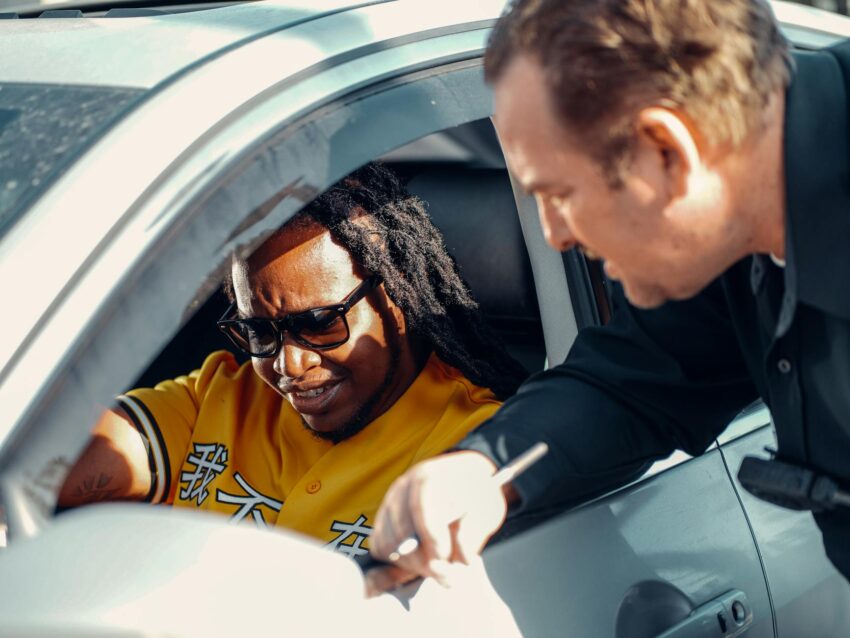
Picture this: You’ve had a couple of drinks with friends, feeling fine, heading home. Suddenly, those dreaded flashing lights appear in your rearview mirror. Your heart sinks. That knot in your stomach tightens. You’re being pulled over. For anyone, this moment is stressful, but if you’ve consumed alcohol, it can feel like your entire future is flashing before your eyes.
I’ve seen this scenario play out countless times in my career, both from clients’ perspectives and from understanding the legal process inside and out. The truth is, a DUI charge can have devastating consequences: hefty fines, license suspension, increased insurance rates, mandatory ignition interlock devices, and even jail time. Beyond the legal penalties, there’s the impact on your job, your reputation, and your peace of mind. But here’s the thing: being pulled over doesn’t mean your fate is sealed. Far from it. Knowing your rights and how to act in those crucial first moments can make all the difference. It can literally protect your future.
The Initial Stop: Keeping Your Cool (and Your Rights)
When those lights flash, the first thing you need to do is pull over safely and quickly. Don’t make any sudden moves. Turn on your interior lights, put your hands on the steering wheel where they’re visible, and wait for the officer to approach. This shows respect and cooperation, which can set a better tone for the interaction.
When the Officer Approaches: Silence is Golden
Once the officer is at your window, they’ll likely ask for your driver’s license, registration, and proof of insurance. Provide these documents calmly. You have to do that. Beyond that, though, be cautious. They might ask, “Do you know why I pulled you over?” or “Have you been drinking tonight?”
Now, this is where many people make their first mistake. They try to explain, to justify, to minimize. Don’t. You have the right to remain silent. It’s not rude; it’s smart. Politely state, “Officer, I prefer not to answer any questions without my attorney present.” You can repeat this. You don’t have to explain why you’re not answering. You simply don’t have to. I’ve found that people often think they can talk their way out of it, but more often than not, they end up giving the police evidence they’ll use against them.
What most people miss is that the officer is already gathering evidence from the moment they approach your car: the smell of alcohol, slurred speech, bloodshot eyes, fumbling for documents. Everything they observe will be noted in their report.
Field Sobriety Tests (FSTs): Your Choice, Your Power
After a few questions, if the officer suspects you’ve been drinking, they’ll likely ask you to step out of the vehicle for a series of “Field Sobriety Tests.” These usually include the Walk-and-Turn, the One-Leg Stand, and the Horizontal Gaze Nystagmus (HGN) test, which involves following a pen or light with your eyes. They might make it sound like these are mandatory, but here’s the absolute critical point:
In most states, these FSTs are completely voluntary.
Let me say that again: *voluntary.* You do not have to perform them. And in my strong opinion, you almost certainly shouldn’t. Why? Because they are designed for you to fail. Seriously. They’re difficult to perform perfectly even when stone-cold sober under ideal conditions. Add nerves, uneven pavement, poor lighting, or even just natural clumsiness, and your chances plummet. I’ve had clients who were stone-cold sober fail these tests purely due to anxiety or a bad back. The officer isn’t looking for perfection; they’re looking for any “clue” of impairment to justify an arrest.
Simply and politely state, “Officer, I decline to perform any field sobriety tests.” You don’t need to explain. You don’t need to justify. You just decline. Be prepared that they might try to convince you, but stand firm.
The Preliminary Alcohol Screening (PAS) Device: Another Voluntary Test
Often, after or instead of FSTs, an officer might pull out a small handheld device and ask you to blow into it. This is a Preliminary Alcohol Screening (PAS) device, sometimes called a portable breathalyzer. It’s meant to give the officer an indication of your Blood Alcohol Content (BAC) at the scene.
Just like FSTs, the PAS test is also voluntary in most states prior to arrest. Refusing it usually carries no immediate legal penalty beyond strengthening the officer’s suspicion, which they likely already have. Again, in my experience, blowing into this device rarely helps your case, as it provides more evidence against you. Politely decline this one too: “Officer, I decline to take that test.”
When You Are Arrested: Implied Consent Kicks In
If you’ve declined FSTs and the PAS, or if you performed them and “failed,” the officer will likely arrest you for DUI. This is the point where things shift significantly, especially regarding chemical tests.
Once you are lawfully arrested for DUI, your state’s “implied consent” law typically comes into play. What does this mean? It means that by driving on public roads, you have *implied* your consent to take a chemical test (usually breath or blood) to determine your BAC *after* a lawful arrest. Refusing a post-arrest chemical test usually carries its own severe penalties, often including an automatic, longer license suspension, regardless of whether you’re ultimately convicted of the DUI itself. This is a critical distinction from the voluntary FSTs and PAS.
At the station, you’ll generally be offered a breath test on a more sophisticated machine (an Intoxilyzer or similar) or a blood test. In some states, you might have a choice. This is a tough spot, and frankly, it’s one of the most complex decisions without immediate legal advice. If you take the test and your BAC is above the legal limit (0.08% for most adults), that’s strong evidence against you. If you refuse, you’ll face the implied consent penalties, but you also make the prosecutor’s job harder because they don’t have that direct BAC number. My advice here is always, if possible, to consult with an attorney immediately upon arrest, but that’s not always practical. It’s a calculated risk, and the specific laws vary wildly by state.
After the Arrest: The Fight for Your Future Begins
Okay, so you’ve been arrested. Now what? This is when you absolutely, positively need to call an attorney specializing in DUI defense. Do not discuss your case with anyone—friends, family, cellmates—other than your lawyer. Anything you say can and will be used against you.
One of the most critical steps after a DUI arrest is the DMV administrative hearing. In most states, you have a very limited timeframe—often just 7 to 10 days—to request a hearing to challenge the suspension of your driver’s license. If you miss this deadline, your license will be automatically suspended, regardless of the outcome of your criminal case. This is a separate process from the court case, and it’s incredibly time-sensitive. A good DUI lawyer will handle this request immediately and represent you at this hearing.
Why You Need a Specialized DUI Lawyer
Look, I’ve seen firsthand how complex DUI law can be. It’s not just about whether you were “over the limit.” A skilled DUI lawyer can challenge every aspect of the stop and arrest:
- The initial stop: Did the officer have reasonable suspicion to pull you over?
- Probable cause for arrest: Was there sufficient evidence to justify the arrest?
- Accuracy of FSTs: Were they administered correctly? Were there external factors affecting your performance?
- Breathalyzer calibration and maintenance: Was the machine properly calibrated? Was the officer certified to operate it?
- Blood test procedures: Was the blood drawn properly? Was it stored correctly? Was the lab analysis accurate?
These aren’t just minor details. They are potential avenues to get evidence suppressed, charges reduced, or even dismissed entirely. A lawyer can negotiate with prosecutors, identify weaknesses in the state’s case, and fight for alternative sentencing options that can mitigate the damage to your life. For example, I once represented a client who was arrested after a fender bender. The officer claimed he smelled alcohol, but the dashcam footage showed the client was clearly coherent and performed FSTs reasonably well despite the stress of the accident. We were able to use that footage to challenge the probable cause for arrest, and the case was dismissed. Without a lawyer, that evidence might never have seen the light of day.
The penalties for DUI are severe, and they can impact your life for years. Don’t go it alone. Your future is too important.
Frequently Asked Questions About DUI Stops
1. Do I have to tell the officer if I’ve been drinking?
No. You have the right to remain silent. Politely state that you prefer not to answer questions without your attorney present. Do not lie, but you are not obligated to provide information that could be used against you.
2. Can I refuse a breathalyzer test at the scene (PAS device)?
Yes, in most states, the handheld Preliminary Alcohol Screening (PAS) device used at the scene is voluntary *before* arrest. Refusing it typically carries no immediate license penalty. However, once you are lawfully arrested for DUI, implied consent laws usually make the official chemical test (breath or blood at the station) mandatory, and refusal often carries severe license penalties.
3. What happens if I refuse the field sobriety tests?
You have the right to refuse Field Sobriety Tests (FSTs) because they are voluntary. There are usually no legal penalties for refusing them. However, the officer may still arrest you for DUI based on other observations (smell of alcohol, bloodshot eyes, admission of drinking, etc.), but refusing FSTs removes a common source of evidence used against you.
4. How quickly do I need to contact a lawyer after a DUI arrest?
Immediately. Critical deadlines, particularly for requesting a DMV administrative hearing to challenge your license suspension, are often as short as 7 to 10 days from the date of arrest. Missing this deadline can result in an automatic license suspension, regardless of your court case outcome.
5. Is it true that a DUI can never be beaten?
Absolutely not. While challenging, DUI cases can be successfully defended. A skilled attorney can scrutinize the legality of the stop, the probable cause for arrest, the administration of tests, the calibration of equipment, and chain of custody for blood samples. Errors in any of these areas can lead to evidence suppression, charge reduction, or even dismissal.