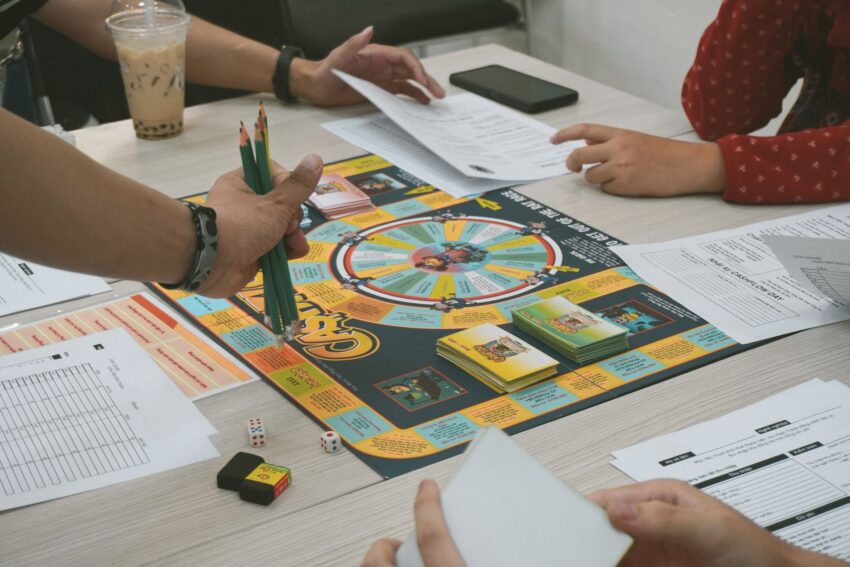
Ever signed up for an online course, full of enthusiasm, only to find yourself staring blankly at a wall of text after twenty minutes? You’re not alone. I’ve been there, more times than I care to admit. The promise of new knowledge quickly drowns in dry lectures and endless reading. But what if learning could feel less like a chore and more like… well, a game?
That’s the magic of gamification in e-learning, and honestly, it’s not just a passing fad. It’s a powerful approach that taps into our innate human psychology, making learning not just effective, but genuinely enjoyable. We’re talking about taking elements that make games so captivating – points, levels, challenges, rewards – and applying them thoughtfully to educational content. It’s not about turning your calculus course into a first-person shooter; it’s about making the learning journey inherently more engaging and rewarding.
The Secret Sauce: What We Mean by Gamification
Here’s the thing: when I talk about gamification, I’m not just suggesting we slap a leaderboard onto every module and call it a day. That’s a common misconception. True gamification is about leveraging the *psychological principles* that make games compelling. It’s about creating a structured experience where learners feel a sense of progression, achievement, and often, a healthy dose of friendly competition.
Think about it. Why do people spend hours on Candy Crush, or meticulously build empires in strategy games? Because these experiences provide immediate feedback, clear goals, incremental progress, and a sense of mastery. When done right, e-learning can borrow these powerful motivators. It can transform passive consumption of information into an active, iterative process that keeps you hooked.
Why Our Brains Crave the Game
Our brains are wired for certain kinds of stimulation, and well-designed games hit a lot of those sweet spots. What most people miss is that gamification isn’t just about making things “fun” in a superficial way; it’s about harnessing fundamental psychological drivers.
The Dopamine Hit of Progress
You know that little rush you get when you complete a task on your to-do list, or hit “send” on an important email? That’s your brain releasing dopamine, a neurotransmitter associated with reward and motivation. Gamified e-learning capitalizes on this by breaking down complex topics into smaller, achievable steps, each with its own mini-reward.
I’ve noticed this firsthand with my own learning. If I’m slogging through a dense textbook, it feels endless. But if I’m using an app that shows me a progress bar filling up, or awards me a “Mastery Badge” for completing a section, suddenly, I’m much more motivated to keep going. That visual representation of progress, those little celebratory animations, they tell my brain, “Hey, you’re doing great! Keep it up!” And my brain, being the simple creature it is, responds with another hit of dopamine, encouraging me to continue.
Mastering the Challenge
Humans are problem-solvers by nature. We love a good challenge, especially one that feels just within our grasp. Gamification excels here by presenting learning as a series of quests or levels, each building on the last. It’s not about rote memorization; it’s about applying knowledge to solve puzzles, conquer scenarios, or even debug code.
The truth is, when a course offers me a sandbox environment where I can experiment, fail safely, and then try again, I learn so much more deeply than if I just read about the concept. It turns abstract ideas into tangible experiences. That feeling of finally cracking a tough problem, of truly understanding a concept because you *applied* it, that’s incredibly satisfying and powerful for long-term retention.
The Power of Play and Practice
Repetition is crucial for learning, but it can be mind-numbingly boring. Gamification transforms this. Instead of endlessly reviewing flashcards, you might be engaging in a timed quiz, battling a virtual opponent with your knowledge, or earning points for correct answers. This makes practice dynamic and engaging, reducing the cognitive load associated with boredom.
Think about language learning apps like Duolingo. They don’t just give you a vocabulary list. They turn vocabulary and grammar into mini-games, daily challenges, and streaks. You’re not just practicing; you’re *playing* your way to fluency. And because the stakes are low – a wrong answer just means trying again – it encourages experimentation and reduces the fear of failure, which is a huge barrier for many learners.
Social Connection and Friendly Rivalry
We’re social creatures. A little competition, or the chance to collaborate, can be a massive motivator. Leaderboards, team projects, and peer-to-peer challenges are common gamified elements that foster a sense of community and drive. Knowing where you stand, or working together towards a common goal, can significantly boost engagement.
In my experience, I’ve seen students who were completely disengaged in a traditional online forum suddenly light up when a course introduced a weekly “knowledge battle” where teams competed to answer questions. It wasn’t about grades; it was about bragging rights and working together. That shared experience, that collective effort, transformed the learning dynamic entirely.
Beyond the Badges: Real-World E-Learning Examples
So, where can you actually see this in action? It’s everywhere once you start looking. We’ve already touched on language apps, but consider:
- Coding Platforms: Websites like Codecademy or freeCodeCamp use interactive lessons, points for correct code, and project-based challenges to teach programming. You literally “level up” your skills.
- Corporate Training: Many companies are moving away from dry PowerPoint presentations to gamified modules that simulate real-world scenarios, offer points for correct decisions, and allow employees to “unlock” new levels of responsibility. This makes compliance training less of a chore and more of an interactive journey.
- Health & Wellness Apps: While not strictly e-learning, many health apps use gamification (streaks, badges, challenges) to encourage healthy habits, which is a form of learning new behaviors. The principles are the same.
- University Modules: More and more universities are integrating gamified elements into their online courses, from virtual escape rooms that test critical thinking to simulated labs where students earn points for successful experiments.
I recently took an online course on project management that used a simulation where I had to manage a virtual project team, make budget decisions, and meet deadlines. Every decision I made had consequences, and I earned “reputation points” with my virtual stakeholders. It felt incredibly real, and I learned more about resource allocation and risk management in that simulation than I ever could have from reading a textbook.
Making Gamification Work FOR You (Not Against You)
Look, the power of gamification is undeniable, but it’s not a magic bullet. It needs to be implemented thoughtfully. For learners, this means seeking out courses that don’t just sprinkle badges on top, but genuinely integrate game mechanics into the learning objectives.
For educators and content creators, the key is to design gamified elements that are meaningful and align with the learning goals. It’s not just about adding points; it’s about:
- Clear Goals: Learners need to know what they’re trying to achieve.
- Immediate Feedback: Did I get it right? Why or why not?
- Meaningful Challenges: Tasks that require thought and application, not just recall.
- Progression: A clear path from novice to master.
- Choice & Agency: Allowing learners some control over their path.
When these elements are in place, gamification stops being a gimmick and becomes a truly transformative tool. It turns learning from a passive reception of information into an active, rewarding adventure. And frankly, that’s how we learn best anyway.
FAQs About Gamification in E-Learning
Q: Isn’t gamification just for kids?
A: Absolutely not! While children often respond well to gamified learning, the psychological principles it taps into (achievement, progress, mastery, social connection) are universal. Adults are just as motivated by these elements, whether it’s in corporate training, professional development, or personal interest courses.
Q: Can gamification make learning too superficial or competitive?
A: It can, if poorly implemented. The goal isn’t just competition for competition’s sake, or superficial rewards. Effective gamification focuses on intrinsic motivation, making the act of learning itself rewarding. When done right, it fosters healthy challenge and collaboration, not cutthroat rivalry.
Q: Does gamification replace traditional teaching methods?
A: No, it enhances them. Gamification is a tool to boost engagement and motivation. It works best when integrated thoughtfully with solid pedagogical principles, clear learning objectives, and well-designed content. It’s about making the learning experience more dynamic, not replacing the core educational material.
Q: What’s the difference between gamification and game-based learning?
A: Gamification applies game elements (points, badges, leaderboards) to existing non-game contexts (like an e-learning course). Game-based learning, on the other hand, involves designing an entire learning experience *as* a game. Think of it this way: gamification adds game elements to a course, while game-based learning *is* the game that teaches you. Both are effective, but they’re distinct approaches.
Q: Is gamification expensive to implement?
A: The cost can vary widely. Simple gamified elements like progress bars, checklists, and basic quizzes can be implemented with many standard e-learning platforms at little additional cost. More complex simulations, custom game environments, or intricate reward systems would naturally require a larger investment in development and design. The key is to start small and iterate, focusing on meaningful impact rather than flashy features.