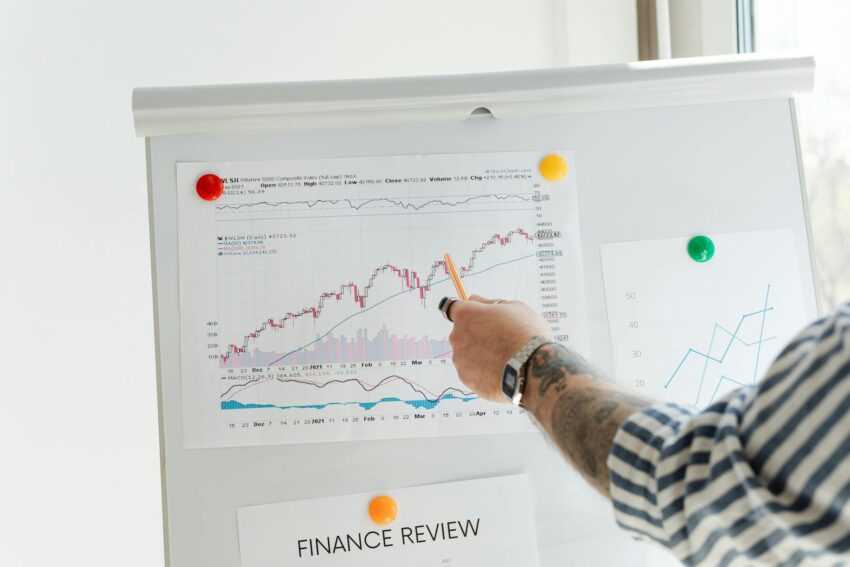
Ever found yourself staring at your portfolio, heart pounding, convinced you needed to buy *that* stock everyone’s talking about? Or maybe you’ve watched the market dip and felt that gut-wrenching urge to sell everything before it gets worse? Look, if you’re nodding along, you’re in good company. We’ve all been there. That frantic, emotional decision-making? That’s impulse investing, and it’s a real killer of long-term wealth.
The truth is, building a solid investment portfolio isn’t about chasing the latest hot trend or reacting to every flicker on the news ticker. It’s about discipline. It’s about having a plan, sticking to it, and letting time and compounding do their magic. In my years of working with investors, I’ve seen firsthand how often people sabotage their own success by letting their emotions dictate their financial moves. And frankly, it’s heartbreaking to watch.
The Siren Song of Impulse: Why We Fall For It
Why is impulse investing so tempting? Well, for starters, our brains aren’t perfectly wired for long-term financial planning. We’re often driven by primal urges: the fear of missing out (FOMO) when everyone else seems to be getting rich, or the panic when the market takes a nosedive. Social media and financial news cycles amplify these feelings, creating an echo chamber of hype and fear.
I remember a client, let’s call him Mark, who came to me a few years back. He’d seen his buddy make a quick buck on a meme stock, and suddenly, his carefully constructed, diversified portfolio felt… boring. He wanted to dump a good chunk of his stable investments into this highly speculative play. We talked it through, but the allure was strong. He ended up putting in a small amount, just to ‘feel like he was in the game.’ He lost it all. Not enough to ruin him, thankfully, but it was a painful, unnecessary lesson. What most people miss is that those quick wins are often exceptions, not the rule, and they certainly don’t build sustainable wealth.
Here’s the thing: market noise is designed to grab your attention, not to make you rich. Financial news thrives on drama. A steady, consistent portfolio doesn’t make for exciting headlines, but it *does* make for a more secure financial future.
Building Your Fortress: The Core of Portfolio Discipline
So, how do we combat these impulses? It starts with building a robust framework for your investing decisions. Think of it as constructing a fortress against your own worst instincts and the market’s unpredictable whims.
The Foundation: Your Investment Policy Statement (IPS)
If you don’t have one, this is your first and most crucial step. An Investment Policy Statement (IPS) is essentially your personal investing constitution. It’s a written document that outlines your financial goals, your risk tolerance, your asset allocation strategy, and the rules you’ll follow for buying, selling, and rebalancing. It’s your rational brain on paper, created when you’re calm and thinking clearly.
For example, my own IPS clearly states my long-term growth goal, my comfort level with market volatility, and my target allocation (e.g., 70% equities, 30% fixed income). It also dictates that I’ll rebalance only once a year, or if an asset class deviates by more than 10% from its target. This way, when the market gets wild, I don’t have to *think* about what to do; I just follow my pre-determined rules. It’s incredibly liberating, trust me.
Automate, Don’t Agonize
One of the simplest yet most powerful ways to fight impulse is to remove yourself from the decision-making process entirely. Set up automatic transfers from your checking account into your investment accounts every payday. This is dollar-cost averaging in action, and it’s a beautiful thing.
When you automate, you’re buying consistently, regardless of market highs or lows. You’re taking advantage of dips without having to time the market (a fool’s errand, in my opinion) and you’re building wealth steadily. You won’t even notice the money leaving your account after a while, and that’s precisely the point.
Schedule Your Check-ins, Don’t Stare
Resist the urge to check your portfolio daily, or even weekly. It’s like checking if a plant has grown every five minutes – you’ll just drive yourself crazy. Constant monitoring often leads to over-trading, which means more fees and usually worse returns.
Instead, schedule specific times to review your investments, perhaps quarterly or semi-annually. This aligns with your IPS and allows you to assess your progress against your long-term goals, rather than getting caught up in short-term fluctuations. During these reviews, you can check if your asset allocation is still on target and make any necessary adjustments based on your IPS, not based on a gut feeling.
Master the Art of Doing Nothing
This might be the hardest lesson for many, but often, the best investment move you can make is no move at all. When markets are volatile, when everyone is panicking or speculating wildly, sitting tight and sticking to your plan is a superpower.
I can’t tell you how many times I’ve seen investors sell low during a downturn, only to miss the subsequent rebound, locking in their losses. Or jump into a hot stock at its peak, only to watch it crash. Patience isn’t just a virtue in investing; it’s a fundamental strategy. Give your investments time to grow, give your strategy time to play out.
Diversification Isn’t Just a Buzzword
A well-diversified portfolio acts as a natural buffer against impulse. If you’re spread across different asset classes (stocks, bonds, real estate), geographies, and industries, no single investment is likely to decimate your entire portfolio. This reduces the emotional impact of any one sector’s poor performance, making you less likely to panic and sell off everything.
It’s about not putting all your eggs in one basket. It sounds simple, but I still see people who are 90% in tech stocks, or heavily concentrated in just a handful of companies they “believe in.” That’s a recipe for emotional swings and potential disaster.
The Long Game: The Power of Patience
Ultimately, portfolio discipline is about playing the long game. It’s about understanding that investing isn’t a sprint; it’s a marathon. The real magic of wealth creation happens over years and decades, fueled by compounding returns and a steady, consistent approach.
When you build real discipline, you free yourself from the tyranny of daily market noise and the emotional rollercoaster of impulse decisions. You empower yourself to make rational choices that align with your true financial goals. It might not be as exciting as chasing the next big thing, but it’s far more effective, and frankly, a lot less stressful.
So, take a deep breath. Step away from the trading app. Write down your IPS. Automate your contributions. And remember: sometimes, the smartest thing you can do for your money is absolutely nothing at all.
Frequently Asked Questions About Portfolio Discipline
Q1: How often should I review my Investment Policy Statement (IPS)?
I recommend reviewing your IPS at least once a year, or whenever there’s a significant life change (marriage, new child, job loss, retirement). Your goals, risk tolerance, and time horizon might shift, and your IPS should reflect that. But don’t change it on a whim or due to market volatility!
Q2: What if I *really* believe in a specific company or trend? Can I still invest in it?
Absolutely, but with discipline. Consider allocating a small percentage of your portfolio (e.g., 5-10%) to a “play money” or “speculative” bucket. This allows you to scratch that itch without derailing your main, disciplined investment strategy. Just be prepared to lose that money; it’s for fun, not core wealth building.
Q3: Is it ever okay to sell during a market downturn?
Generally, no. Selling during a downturn locks in your losses and prevents you from participating in the eventual recovery. The only valid reasons to sell in a downturn would be if your financial situation has drastically changed (e.g., unexpected job loss and you need the cash for essentials) or if your IPS dictates a rebalancing that involves selling over-performing assets (which might happen to be bonds during a stock downturn) to buy under-performing ones (stocks).
Q4: How do I avoid “analysis paralysis” when trying to make disciplined decisions?
This is where your IPS is your best friend. The IPS simplifies decision-making by providing clear guidelines. Instead of endlessly researching every option, you simply ask: “Does this align with my IPS?” If it does, great. If not, move on. Automation also helps bypass this by removing the need for constant decisions.
Q5: My friends are always talking about their gains. How do I resist comparing myself?
This is tough, but crucial. Remember that everyone’s financial situation, goals, and risk tolerance are different. Your friend’s “gains” might come with risks you’re not comfortable with, or they might be exaggerating. Focus on *your* plan and *your* progress toward *your* goals. Your financial journey is personal, not a competition.