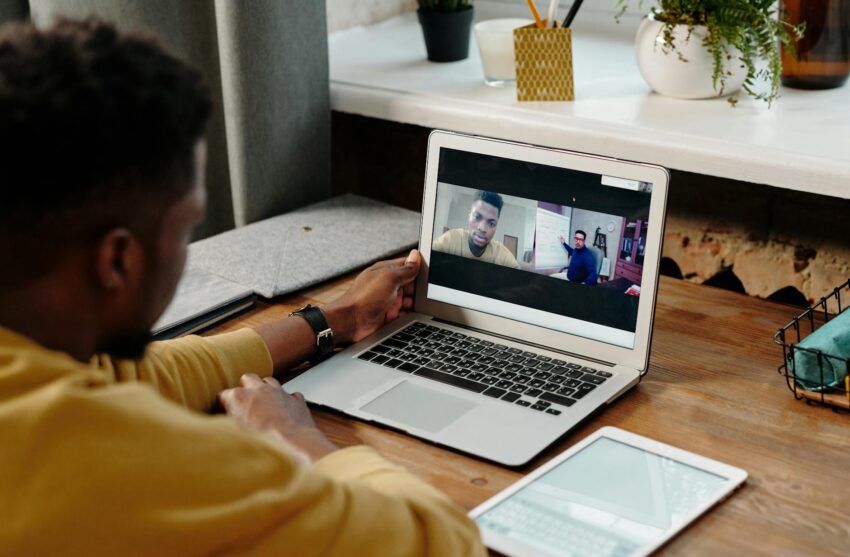
Ever stopped to think about what truly prepares you for the twists and turns of life, work, and even just navigating a challenging conversation? Is it strictly your GPA from that calculus class, or perhaps the ability to calmly troubleshoot a tech meltdown at 3 AM? The truth is, while grades open doors, it’s those intangible, often un-graded abilities – what we call soft skills – that keep you moving forward and truly thriving. And here’s the kicker: the world of e-learning, often seen as just a way to learn facts, is actually a powerful, often overlooked, bootcamp for sharpening these very essential soft skills.
For years, I’ve watched students, including myself, grapple with the demands of a rapidly changing world. What most people miss is that the structure (or lack thereof) of online education inherently pushes you to develop a whole host of skills that traditional classrooms, with their fixed schedules and constant supervision, rarely do. It’s not just about what you learn; it’s about how you learn it. And in that “how,” lies a treasure trove of personal and professional development.
The Hidden Curriculum of Online Learning
When you sign up for an online course, whether it’s a coding bootcamp, a digital marketing certification, or a master’s degree, you’re not just signing up for lectures and assignments. You’re enrolling in a masterclass on self-management, communication, and adaptability. I’ve found that the very nature of remote learning forces a kind of independence that’s incredibly valuable. It’s a hidden curriculum, silently teaching you far more than just the subject matter.
Becoming a Time Management Maestro
Look, I’m going to be honest with you: when I first dipped my toes into a completely self-paced online course, I thought it would be a breeze. “No lectures to attend, I can do it whenever!” Oh, how wrong I was. Two weeks in, I realized I was dangerously behind, staring down a mountain of unread material and looming deadlines. That’s when the panic, and subsequently, the learning, truly kicked in.
I had to devise a system. I started blocking out specific hours in my calendar, just as if I were going to a physical class. I broke down huge modules into smaller, manageable chunks. I learned to prioritize tasks, to say “no” to distractions, and to hold myself accountable, even when no one else was directly watching. This wasn’t just about finishing the course; it was about building a muscle for self-discipline and organization that I now apply to every area of my life. You’ll notice this too – e-learning demands that you become your own project manager, and that skill is pure gold.
Communication Skills: From Keyboard to Clarity
Think about a typical classroom. You raise your hand, you speak, you get immediate feedback. Now, imagine an online group project. My absolute nightmare (and ultimate learning experience) was a virtual team assignment where half the group was in different time zones, and everyone had a different idea of what “clear communication” meant. Emails were misinterpreted, forum posts were ambiguous, and virtual meetings felt like trying to herd cats.
It forced me to become incredibly precise in my written communication. I learned to anticipate questions, to structure my thoughts logically, and to be explicit with deadlines and expectations. I had to practice active listening even when it was just reading text, trying to understand the underlying intent. We also had to learn how to give and receive feedback constructively through text, which is an art form in itself! Mastering asynchronous communication – knowing how to convey complex ideas without immediate verbal cues – is a hugely underrated skill in today’s global, remote-friendly workplace. It’s a skill you’ll absolutely hone through e-learning discussion boards, virtual team chats, and written assignments.
Problem-Solving & Critical Thinking: No Teacher to Hold Your Hand
Here’s the thing about online learning: you often don’t have a teacher right there to answer every little question. I remember getting stuck on a particular coding challenge in an online Python course. I stared at my screen for what felt like hours, trying every permutation I could think of. In a traditional setting, I might have just raised my hand and asked for a hint. But online? That wasn’t an immediate option.
This forced me to become a detective. I scoured forums, read documentation, watched supplementary YouTube tutorials, and even tried to debug my code line by line. It was frustrating, but incredibly empowering. This kind of independent problem-solving, the relentless pursuit of a solution without immediate external assistance, builds resilience and critical thinking in a way that being spoon-fed answers never will. You learn to be resourceful, to analyze problems from multiple angles, and to trust your own ability to figure things out. That’s real-world preparation right there.
Adaptability & Tech Savvy: Navigating New Digital Waters
Let’s be real, the digital landscape is constantly evolving. One course might use Canvas, another Moodle, a third might rely heavily on Slack for communication and Zoom for live sessions. I’ve personally had to quickly get up to speed on half a dozen different learning management systems, video conferencing tools, and collaboration platforms just to keep pace with various online programs.
This constant exposure to new technologies and learning environments isn’t just about becoming “tech-savvy” – though you absolutely will. It’s about developing an incredible sense of adaptability. You learn to quickly assess new interfaces, understand new workflows, and troubleshoot minor technical glitches on your own. This ability to pivot, to learn on the fly, and to remain calm when technology throws a curveball is a priceless asset in any career path. It teaches you to embrace change, not fear it.
Why These Skills Matter More Than Ever
You might be thinking, “Okay, these sound useful, but do they really outweigh a stellar transcript?” In my opinion? Absolutely. We’re living in an era where jobs are evolving faster than curricula can keep up. Employers aren’t just looking for people who know things; they’re looking for people who can learn things, who can communicate effectively, solve novel problems, work collaboratively (even remotely), and manage themselves without constant oversight.
Traditional education, with its heavy emphasis on memorization and standardized testing, often falls short in cultivating these nuanced soft skills organically. E-learning, however, by its very nature, demands their development. It’s not just an alternative way to get an education; it’s a profound incubator for the skills that define success in the 21st century. So, next time you’re considering an online course, remember you’re not just signing up for knowledge – you’re signing up for a transformative journey in personal and professional development that goes far beyond any grade.
Frequently Asked Questions About E-Learning & Soft Skills
- Is e-learning really as effective as traditional learning for developing soft skills?
- In my experience, yes, often even more so in specific areas. While traditional settings might offer more spontaneous in-person interaction, e-learning excels at forcing self-discipline, highly structured written communication, independent problem-solving, and digital adaptability, which are paramount in today’s world.
- What if I’m not very self-disciplined? Can e-learning still help?
- Absolutely! E-learning is actually an excellent way to *build* self-discipline. You’ll learn quickly that without it, you’ll struggle. Start with shorter, more structured courses, use calendars and reminders religiously, and find accountability partners if possible. The struggle itself is part of the learning process.
- How can I showcase these e-learning developed soft skills on my resume?
- Don’t just list the course title. In your experience or skills section, describe *how* you completed the course. For example: “Managed self-paced learning for a 6-month online certification, demonstrating strong time management and independent problem-solving to complete projects ahead of schedule.” Or, “Collaborated virtually with a diverse team on an online project, honing asynchronous communication and digital collaboration tools.”
- Are there specific types of e-learning that are better for soft skill development?
- Courses with group projects, active discussion forums, and practical, project-based assignments tend to be excellent. Live virtual sessions also push communication and presentation skills. Anything that demands you actively engage, rather than just passively consume content, will be more effective.
- What’s the biggest mistake people make when trying to develop soft skills through e-learning?
- The biggest mistake is treating it like passive content consumption. If you just watch lectures and skim readings without actively participating in discussions, applying what you learn, or engaging with any collaborative elements, you’ll miss out on most of the soft skill development opportunities. You have to lean into the challenges and actively participate in the process.