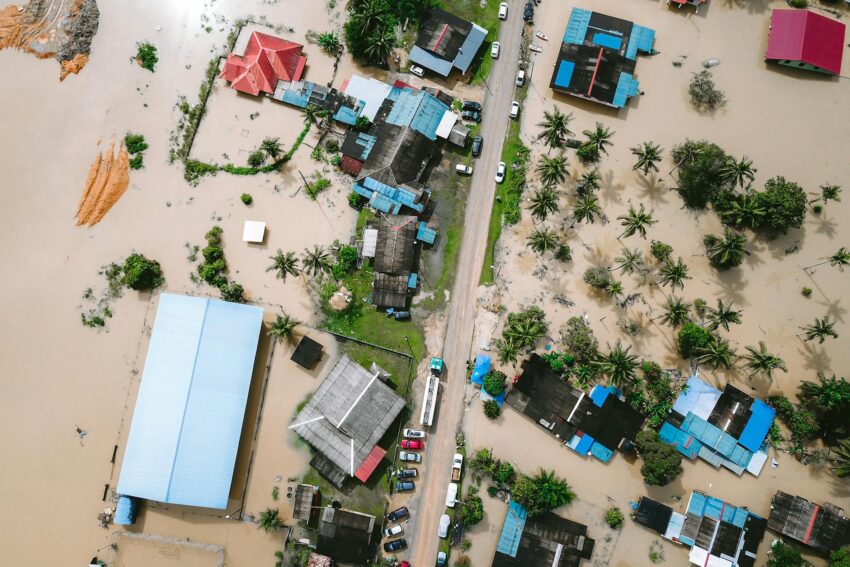
You’ve found it. The perfect home. The kitchen has that island you always dreamed of, the backyard is ideal for summer barbecues, and the neighborhood feels just right. You’ve checked the schools, timed the commute, maybe even scoped out the local coffee shops. But did you ask yourself the really tough questions? The ones that might save you from a future nightmare of rising waters or encroaching flames?
I’m talking about climate risk. For years, when I helped clients find their dream homes, we focused on the usual suspects. Location, price, condition. All critical, of course. But the world is changing, and with it, the risks associated with homeownership. What was once considered a rare, freak event is becoming a more common, devastating reality for homeowners across the globe. We simply can’t afford to ignore flood and fire risk anymore when making what is likely the biggest financial decision of our lives. It’s not just about protecting your investment; it’s about securing your peace of mind and, frankly, your future.
The Shifting Landscape: Why Climate Risk is Non-Negotiable Now
Here’s the thing: the old ways of assessing risk just don’t cut it. The 100-year flood isn’t happening every 100 years anymore. Wildfire seasons are longer, more intense, and popping up in places we never expected. I’ve seen properties in areas that historically had no flood issues suddenly submerged after a torrential downpour. I’ve watched friends in seemingly safe, suburban communities evacuate as wildfires threatened their homes. It’s unnerving, and it’s a stark reminder that we need to be proactive, not just reactive.
The truth is, climate change isn’t some abstract concept affecting polar bears; it’s impacting our mortgages, our insurance premiums, and our very homes. Insurance companies, who are masters of risk assessment, are already adjusting. Premiums are skyrocketing in some areas, and in others, coverage is becoming almost impossible to find. That alone should be a massive red flag for any prospective homeowner. What most people miss is that a beautiful house can quickly become an uninsurable liability if you don’t do your due diligence up front.
Digging into Flood Risk: More Than Just the FEMA Map
When most people think about flood risk, their minds immediately go to FEMA maps. And yes, those maps are a starting point. A very important starting point, actually. But they are far from the whole picture.
Beyond the “X” Zone: What the FEMA Map *Doesn’t* Tell You
If a property is in an “X” zone on a FEMA map, that means it’s considered to be outside the 100-year and 500-year floodplains, and flood insurance isn’t typically federally mandated. Sounds great, right? Not so fast. I’ve seen countless homeowners get caught out because they relied solely on this. FEMA maps are often based on historical data that can be decades old, and they don’t always account for rapid development, changes in drainage patterns, or the increased intensity of rainfall we’re experiencing.
What about pluvial flooding? That’s the fancy term for flash floods caused by heavy rainfall that simply overwhelms local drainage systems. It can happen anywhere, even on high ground, if the water has nowhere to go. I know a guy who bought a house on a hill, thinking he was totally safe. A few years later, a massive storm hit, and his basement filled with water because his street became a river and his drains couldn’t cope. His house wasn’t in any FEMA flood zone, but tell that to his ruined carpet and appliances.
Your Flood Risk Homework: Essential Checks
So, what should you do?
- Go beyond FEMA: Check local city or county flood plain maps. Often, these are more granular and updated more frequently.
- Look for an Elevation Certificate: This document shows the elevation of the lowest floor relative to the base flood elevation. It’s crucial for understanding actual risk and for flood insurance rates. If the seller doesn’t have one, consider getting one yourself during inspections.
- Observe the Lay of the Land: Seriously, walk around the property. Are there natural depressions where water might collect? Does the property slope towards the house? Are there proper drainage systems in place, like French drains or good gutters? Where does the water go when it rains heavily?
- Talk to the Locals: This is invaluable. Chat with neighbors, mail carriers, or even local community groups online. They’ll often have firsthand knowledge of past flooding events that never made it onto any official map. Ask your real estate agent if they have local insights – a good agent will be honest with you.
- Research Future Projections: There are great resources out there now, like FloodFactor.com (not an endorsement, just a useful tool), that use climate models to predict future flood risk for specific addresses. It’s a game-changer for understanding the long-term outlook.
- Get Flood Insurance Quotes EARLY: This is perhaps the most direct indicator of risk. If it’s incredibly expensive or hard to get, that’s a huge warning sign. Even if not mandated, I often recommend my clients get flood insurance, especially if there’s any perceived risk. It’s better to be safe than sorry, always.
Assessing Wildfire Risk: Where the Flames May Roam
Wildfire risk, once primarily a concern for remote cabins, is now a very real threat for many suburban and even urban areas. We’re seeing it spread, quite literally, due to hotter, drier conditions and encroaching development.
Understanding the Wildland-Urban Interface (WUI)
The term “Wildland-Urban Interface” (WUI) might sound technical, but it’s straightforward: it’s where developed areas meet wildland. And that’s where the danger lies. More and more homes are being built in or near these zones. The vegetation acts as fuel, and strong winds can carry embers for miles, igniting homes well away from the initial fire line. I’ve witnessed communities that seemed perfectly safe, with well-manicured lawns, suddenly facing evacuation orders because a brush fire miles away became an inferno. It’s a terrifying scenario, and one we need to take seriously.
Your Wildfire Risk Homework: What to Look For
When considering a property, especially in areas prone to wildfires:
- Defensible Space: This is huge. Look at the immediate surroundings. Is there a “defensible space” of at least 30-100 feet around the home, free of highly flammable vegetation? Are there dead trees, dense brush, or dry grass right up against the house? These are major fire hazards.
- Building Materials Matter: What’s the roof made of? Are the vents screened to prevent embers from entering? Is the siding fire-resistant? These details can make a significant difference in a wildfire event.
- Slope and Aspect: Homes on slopes are more vulnerable, as fires tend to move uphill faster. The direction the slope faces (aspect) can also play a role with sun exposure and vegetation dryness.
- Local Fire Department Resources: What’s the response time like? Does the local fire department have the resources to fight wildfires, or are they primarily equipped for structural fires? Some areas have specific fire districts or community programs focused on wildfire prevention.
- Historical Data & Projections: Similar to flood risk, check historical fire maps and use tools like RiskFactor.com to get an idea of the property’s wildfire susceptibility. Again, talk to locals. They’ll remember past fires.
- Insurance, Insurance, Insurance: I can’t stress this enough. If you’re getting quotes that are astronomical, or if insurers are flat-out refusing to cover properties in certain areas, that’s not just a sign of high risk; it’s a sign that the market already knows what you might be getting into.
The Insurance Factor: Your Crystal Ball (and Wallet)
Look, insurance companies aren’t in the business of charity. They are incredibly sophisticated at assessing risk. If they deem a property to be high-risk for flood or fire, your premiums will reflect that – or they might not offer coverage at all. What most people miss is that a really high insurance premium isn’t just an added cost; it’s a giant, flashing neon sign telling you something critical about the property’s vulnerability.
I once had a client who fell in love with a charming home in a beautiful, wooded area. We got through the offer, the inspection, everything. Then, at the eleventh hour, their insurance broker came back with a quote that was five times what they expected, citing extreme wildfire risk. Suddenly, that “dream home” became a financial burden and a source of constant anxiety. They walked away, and it was the right decision. Always get insurance quotes *before* removing your inspection contingency.
My Takeaway: Buy Smart, Live Secure
This isn’t about scaring anyone away from homeownership. It’s about empowering you with the knowledge to make smart, informed decisions. Your home is more than just four walls and a roof; it’s your sanctuary, your biggest investment, and a huge part of your financial future. Ignoring these growing climate risks is like buying a car without checking the brakes – it might look great on the outside, but you’re setting yourself up for disaster down the road.
So, ask the tough questions. Do your research. Don’t just rely on a quick glance at a map. Be proactive, be diligent, and buy a home that you can truly live in securely, knowing you’ve done everything you can to protect it from the elements. Your peace of mind is worth it.
FAQ: Climate-Proofing Your Home Purchase
Q1: I’m not in a coastal area or forest. Do I still need to worry about flood or fire risk?
Absolutely. Pluvial (flash) flooding can happen anywhere with heavy rainfall, overwhelming drainage systems. Wildfires are also spreading into areas previously considered safe, especially in the Wildland-Urban Interface. It’s crucial to assess localized risks, not just broad regional ones.
Q2: My real estate agent said the area has never flooded/had a wildfire. Is that enough?
While local insight from your agent is valuable, it’s not a substitute for your own due diligence. Historical data is important, but climate patterns are changing. Always cross-reference with official maps, environmental reports, and future climate projections. What “never happened” before might be a real possibility now.
Q3: How much extra should I budget for flood or fire insurance if I’m in a higher-risk area?
This varies widely based on location, property characteristics, and the specific insurer. It could range from a few hundred dollars to several thousand per year. The only way to know for sure is to get detailed quotes from multiple insurance providers early in your home-buying process. Don’t guess; get actual numbers.
Q4: What if I find a home I love, but it has some flood/fire risk? Should I just walk away?
Not necessarily. It depends on the level of risk and whether it can be mitigated. For flood risk, things like elevating mechanicals, improving drainage, or adding flood vents can help. For fire, creating defensible space and using fire-resistant building materials are key. Factor in the cost of these mitigations and the ongoing insurance premiums. Sometimes, a “risky” home can be a good purchase if the price reflects the risk and you’re prepared to invest in protection.
Q5: Are there government programs or resources to help homeowners with climate risk mitigation?
Yes, many states and local governments offer programs, grants, or information resources for flood and wildfire mitigation. FEMA also has programs like the Hazard Mitigation Grant Program (HMGP) that can assist communities and individuals. Check your state’s emergency management agency or local planning department websites for specific opportunities in your area.