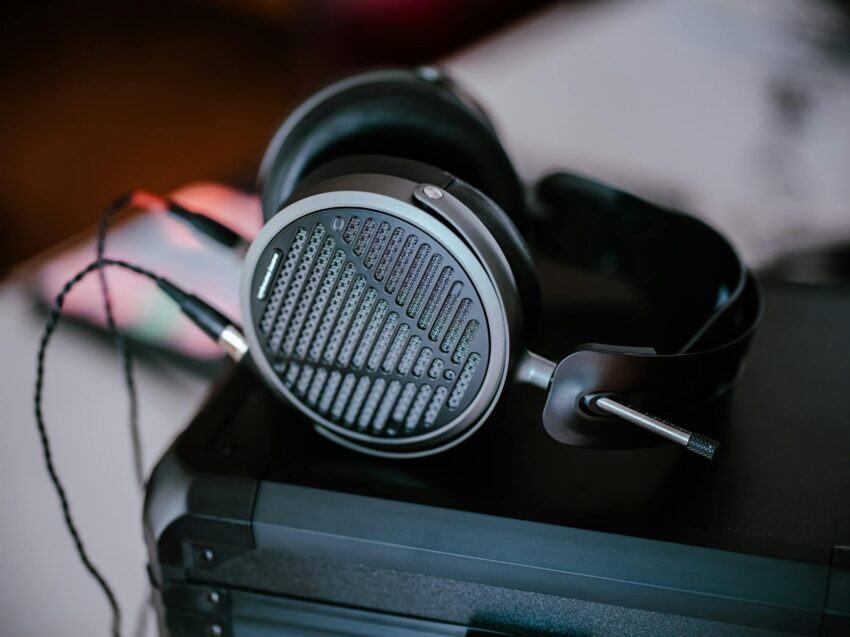
Picture this: you’re engrossed in a movie, a high-octane action sequence is unfolding, and suddenly, a helicopter whirs by, not just from left to right in your headphones, but seemingly above you, its blades thumping as it recedes into the distance. Or maybe you’re playing your favorite immersive game, and you hear footsteps not just generally “behind you,” but specifically to your rear-left, allowing you to react with lightning speed. And then there’s music – imagine your favorite track, but instead of the instruments being flattened into a stereo image, they’re spread out around you, as if you’re standing right in the middle of the recording studio or at the best seat in a live concert.
Sounds like science fiction, right? Well, it’s not. This isn’t some futuristic dream; it’s the present reality of spatial audio, and it’s quickly becoming one of the most transformative technologies in how we experience digital sound. For me, someone who lives and breathes all things tech and has a serious appreciation for good audio, spatial audio isn’t just a neat trick – it’s a fundamental shift, much like the jump from mono to stereo or black-and-white to color TV.
The truth is, for decades, our personal audio experience has been largely confined to stereo. That’s two channels: left and right. It works, it’s familiar, and we’ve all grown up with it. But what if I told you there’s a whole dimension of sound you’ve been missing? That’s precisely what spatial audio unlocks. It’s about moving sound from a flat, two-dimensional plane into a rich, three-dimensional soundscape. And once you experience it, it’s incredibly hard to go back.
Beyond Stereo: What Exactly Is Spatial Audio?
Let’s cut through the jargon for a moment. At its core, spatial audio is all about creating the illusion that sound is coming from specific points in a 3D space around you, rather than just directly from two speakers or headphones. Think about how you hear in the real world: sound waves bounce off objects, they reach your ears at slightly different times, and your brain processes all of that information to pinpoint where a sound source is coming from – whether it’s a car driving past, a bird chirping above, or someone talking behind you.
Traditional stereo, by contrast, gives you a left and right channel. Your brain can infer some sense of width, but it’s often more like listening to a performance on a stage in front of you. Spatial audio aims to virtually recreate that real-world auditory experience, placing sound objects not just left and right, but also above, below, in front, and behind you. It’s like the difference between looking at a photograph of a landscape and actually standing in the middle of that landscape.
What most people miss is that this isn’t just about making things louder or adding reverb. It’s about precision and immersion. It’s about tricking your brain into believing that a sound isn’t emanating from the drivers right next to your eardrums, but from a distinct, tangible point in a virtual space.
The Magic Behind the Soundstage: How It Works
Now, how do we pull off this auditory sleight of hand? It’s a combination of clever audio processing, sophisticated algorithms, and sometimes, specialized hardware. Let’s break down the key ingredients:
Head-Related Transfer Function (HRTF)
This is where things get a bit technical, but bear with me because it’s fascinating. Every single person hears sound differently because of the unique shape of their head, outer ears (pinnae), and even their torso. These physical attributes affect how sound waves arrive at your eardrums, creating subtle cues that your brain uses to locate sounds in space. This unique “audio fingerprint” for how sound reaches your ears from different directions is called your Head-Related Transfer Function, or HRTF.
Spatial audio systems use generalized HRTF models (or, in some advanced cases, even personalized ones) to process audio. They essentially filter and delay sounds in a way that mimics how your ears would naturally hear them if they were coming from a specific point in a 3D environment. This creates the illusion of depth, height, and distance, even though all the sound is ultimately being delivered through two headphone drivers. It’s incredibly clever stuff, leveraging our brain’s natural ability to interpret these cues.
Object-Based Audio
Another crucial element is the move from traditional channel-based audio (like 5.1 or 7.1 surround sound, which assigns sounds to specific speakers) to object-based audio. With object-based audio, sound engineers don’t just mix a sound to the “front left speaker” or “rear right speaker.” Instead, they treat individual sounds – a dialogue track, a gunshot, a musical instrument – as discrete “audio objects” that can be precisely placed and moved within a 3D virtual space.
This metadata, which includes information about an object’s position, velocity, and size, is then sent along with the audio. When you play it back, your device or system uses this metadata, combined with HRTF processing, to render the sound objects in the most immersive way possible for your specific setup, whether it’s a pair of headphones or a multi-speaker system. It’s a much more flexible and powerful way to design soundscapes.
Dynamic Head Tracking
This is the real showstopper for many people, and it’s what truly elevates the experience with headphones. Imagine you’re listening to spatial audio with dynamic head tracking enabled. The sound source, let’s say a voice, feels like it’s coming from your device – your phone or tablet – in front of you. Now, turn your head to the left. With traditional audio, the sound would simply stay in your left ear. But with dynamic head tracking, the soundscape remains fixed in space relative to your device. So, as you turn your head, the voice still feels like it’s coming from the original position in front of your device, just as it would in real life.
This phenomenal capability is achieved using accelerometers and gyroscopes built into your headphones (like Apple’s AirPods Pro/Max, Sony’s WH-1000XM5, or many gaming headsets) and your source device. They constantly monitor your head’s position and re-render the sound in real-time, maintaining that consistent, fixed soundstage. It makes a huge difference, particularly for watching movies on a tablet, as it grounds the audio to the screen, enhancing the feeling that the sound is truly coming from the visuals.
Why Should You Care? The Benefits of Stepping into 3D Sound
Look, I get it. Another tech buzzword, another thing to “upgrade” to. But trust me on this one: spatial audio isn’t just a marketing gimmick. It fundamentally changes how you interact with your media. Here’s why I think it’s a big deal:
Unparalleled Immersion in Entertainment
This is where spatial audio truly shines. For movies and TV shows, it’s like having a miniature cinema experience right in your headphones. Explosions don’t just rumble; they reverberate around you. Dialogue feels anchored to the characters on screen, even if they’re off to the side. Rain sounds like it’s falling around you, not just playing in your ears. I remember watching Dune on a flight with my AirPods Max and the spatial audio on, and it was breathtaking. The sandworm scene? Absolutely terrifying because the sound felt so expansive and menacing, truly enveloping me.
For gaming, it’s even more impactful. Hearing precise footsteps above you in a multi-level arena, or the distinct direction of an enemy’s reload, provides a genuine competitive advantage. It’s not just about immersion; it’s about situational awareness. Playing games like Call of Duty, Horizon Forbidden West, or Spider-Man: Miles Morales on my PlayStation 5 with Sony’s Tempest 3D Audio Tech has been a revelation. You don’t just hear the world; you feel like you’re truly in it.
A New Dimension for Music
Now, this is an area that sparks a lot of debate, but in my opinion, when done right, spatial audio for music is an absolute game-changer. Imagine listening to a live recording and feeling like you’re in the front row, with the drums behind the vocalist, the guitar to your left, and the keys to your right. Or with studio recordings, hearing individual instruments and vocal harmonies spread out in a way that reveals incredible detail you never noticed before. It can make familiar tracks feel fresh and new.
For me, the first time I heard Queen’s “Bohemian Rhapsody” or Billie Eilish’s “bad guy” in Dolby Atmos on Apple Music, it was an epiphany. I literally pulled my headphones off to check if my speakers were on, because the sound was so expansive, so “outside” my head. It truly felt like the music was happening around me, not just playing into my ears. It’s not for every track, mind you – some older recordings can feel a bit forced – but when an artist and mixing engineer embrace the format, it’s truly magical.
Enhanced Communication and Productivity
This is a benefit many people overlook. Think about video conferencing. With spatial audio, voices of different participants can be positioned virtually around you, making it feel more like a natural in-person meeting rather than a flat, undifferentiated wall of sound. This can reduce cognitive load and make long calls less fatiguing. While not as widespread yet, I’ve seen some promising integrations, and I believe this will become a standard feature in professional communication tools.
Accessibility and Awareness
For individuals with certain hearing impairments or those who struggle with auditory processing, spatial audio could offer significant benefits. By clearly separating and positioning sound elements, it might make dialogues easier to follow in noisy environments or help differentiate critical audio cues. It’s an area ripe for further exploration, but the potential is certainly there.
The Ecosystem: Where Can You Experience This Magic?
So, you’re intrigued. You want to try it. Good! The good news is that spatial audio isn’t some niche, inaccessible tech anymore. It’s becoming increasingly integrated into the devices and services we use every day. Here’s a quick rundown of where you’ll find it:
Hardware: Your Ears’ New Best Friends
Headphones
This is probably the most common entry point. Many modern headphones, especially those from major brands, now support some form of spatial audio. Here are some of the popular players:
- Apple AirPods (Pro, Max, 3rd Gen): These are often the benchmark for seamless integration with Apple’s ecosystem, offering dynamic head tracking and excellent performance with Apple Spatial Audio.
- Sony WH-1000XM Series (e.g., XM4, XM5): Sony’s flagship noise-cancelling headphones are fantastic, and they support Sony’s 360 Reality Audio, which is their take on immersive sound.
- Sennheiser, Bose, JBL, etc.: Many other premium headphone brands are now incorporating spatial audio capabilities, often leveraging Dolby Atmos or their own proprietary tech.
- Gaming Headsets: Brands like SteelSeries, Astro, HyperX, and Razer have been pushing virtual surround sound for years, which is a precursor to spatial audio. Modern gaming headsets often support Windows Sonic, Dolby Atmos for Headphones, or DTS Headphone:X, offering impressive directional audio in games.
Soundbars and Home Theater Systems
While headphones offer a personal and often more convincing spatial experience due to their direct-to-ear delivery, multi-channel speaker systems are where spatial audio truly flexes its muscles for a room-filling experience. Systems compatible with Dolby Atmos and DTS:X use upward-firing speakers to bounce sound off your ceiling, creating the illusion of overhead sound, combined with traditional surround speakers for a truly enveloping soundstage. If you have the space and the budget, a well-calibrated Atmos system is breathtaking.
Software & Platforms: The Brains Behind the Sound
The magic isn’t just in the hardware; it’s heavily reliant on the software and the specific spatial audio codecs being used.
- Apple Spatial Audio: This is Apple’s overarching implementation, primarily for their AirPods lineup, deeply integrated into iOS, iPadOS, tvOS, and macOS. It supports content mixed in Dolby Atmos and 5.1/7.1 surround sound.
- Dolby Atmos: Perhaps the most widely adopted spatial audio format. You’ll find it in cinemas, streaming services, Blu-ray discs, and gaming. It’s an object-based audio format that can scale from headphones to massive multi-speaker setups.
- Sony 360 Reality Audio: Sony’s proprietary format, primarily focused on music, creates an immersive spherical sound field. It’s supported on various Sony headphones and through streaming services like Tidal and Amazon Music HD.
- DTS:X: Dolby’s main competitor, DTS:X is also an object-based audio format found in home theater systems and some streaming content.
- Windows Sonic / Dolby Atmos for Headphones / DTS Headphone:X: These are software solutions for Windows PCs and Xbox consoles that provide virtual spatial audio over any pair of stereo headphones, enhancing gaming and movie experiences.
- Tempest 3D AudioTech (PS5): Sony’s custom 3D audio engine for the PlayStation 5 is specifically designed to deliver incredibly precise and immersive 3D sound through any headphones connected to the console, and eventually through TV speakers.
Content: What Can You Listen To?
All the tech in the world is useless without content. Thankfully, more and more media is becoming available in spatial audio formats:
- Streaming Services (Music): Apple Music, Tidal, and Amazon Music HD all offer extensive catalogs of music mixed in Dolby Atmos or Sony 360 Reality Audio.
- Streaming Services (Video): Netflix, Disney+, Max (formerly HBO Max), Apple TV+, and Amazon Prime Video all stream content with Dolby Atmos audio, which can be enjoyed with compatible headphones or home theater systems.
- Games: Modern games, especially on consoles like the PS5 (with Tempest 3D Audio) and Xbox Series X|S (with Dolby Atmos for Headphones/DTS Headphone:X/Windows Sonic), are increasingly designed with spatial audio in mind.
- VR/AR Experiences: This is arguably where spatial audio makes the most sense. Truly immersive virtual reality absolutely depends on convincing spatial sound to sell the illusion.
My Journey into the Third Dimension of Sound: Personal Anecdotes
I’ve been a self-proclaimed audiophile for years, always chasing that perfect sound. I’ve shelled out for high-end headphones, invested in DACs and amps, and spent countless hours meticulously positioning speakers. So, when spatial audio started becoming mainstream, I was naturally skeptical. Another gimmick, I thought, like those “3D audio” CDs from the 90s.
My first real “aha!” moment came with the launch of Apple’s Spatial Audio for AirPods Pro. I remember putting on “Bohemian Rhapsody” from Queen on Apple Music. The opening vocals came in, and I genuinely thought my living room speakers were on. I pulled my AirPods off, checked, and nothing. It was all coming from the headphones, but it was like the sound was filling the room around me. The guitar solos soared from above and to the left, the harmonies swirled, and the drums had this incredible sense of space. It wasn’t just left-right; it was everywhere. I sat there, grinning like an idiot, for the entire track. That was the moment I realized this wasn’t a gimmick; it was the real deal.
Then came the PlayStation 5. Sony’s Tempest 3D AudioTech is truly something special. Playing Returnal, a notoriously difficult roguelike, became a whole new experience. Hearing the alien creatures skittering in the vents above me, or the distinct whir of a projectile whizzing past my character’s head from the exact direction it came from, wasn’t just cool – it was tactical. It allowed me to react faster, to pinpoint threats without even seeing them. It made the game incredibly immersive and, frankly, a little easier to survive. I also love how it makes the smallest details pop, like the rustling of leaves in Ghost of Tsushima or the distant chatter in the streets of *Cyberpunk 2077*.
For movies, my go-to test has become anything with a good sound design. Watching Top Gun: Maverick on my iPad with my AirPods Max was a revelation. The jet engines roar past, the missiles scream, and the dialogue remains anchored to the screen, even as I shift my head to get comfortable. It truly creates a bubble of immersion, making me forget I’m on a cramped airplane seat. It’s particularly impressive how subtle ambient sounds like distant city noises or a gentle breeze are rendered with such realism that they feel like they’re happening in the room with me.
Now, it’s not always perfect. I’ve found that some older music tracks remixed for spatial audio can feel a bit hollow or unnaturally spread out, almost like the engineers tried too hard to fill the space. But when a track is mixed natively or with real care, it elevates the listening experience significantly. I mean, listen to The Weeknd’s “Blinding Lights” or anything from Hans Zimmer in Dolby Atmos – it’s a completely different vibe. It adds a layer of depth and excitement that stereo simply can’t match.
Getting Started: Your First Steps into Immersive Sound
Ready to jump in? Here’s what you’ll typically need to start experiencing spatial audio:
- Compatible Headphones or Speakers: For most people, a good pair of headphones that support spatial audio (like the AirPods Pro/Max, newer Sony WH-1000XM series, or many gaming headsets) is the easiest starting point. If you’re going the home theater route, you’ll need a Dolby Atmos or DTS:X compatible receiver and speakers.
- A Compatible Device: An iPhone, iPad, Apple TV, Mac, a PlayStation 5, an Xbox Series X|S, or a modern Windows PC are all excellent starting points. Many Android phones also support Dolby Atmos processing.
- Spatial Audio Content: Subscribe to a streaming service that offers spatial audio (Apple Music, Tidal, Amazon Music HD for music; Netflix, Disney+, Max, Apple TV+ for video). Look for content explicitly labeled with “Dolby Atmos,” “360 Reality Audio,” or “Spatial Audio.”
- Enable It! Make sure spatial audio is turned on in your device’s settings. For AirPods, it’s usually under Bluetooth settings. For consoles, check the audio output settings.
My advice? Start with a well-mixed movie or a music track you know intimately. That way, you’ll really notice the difference. Don’t expect every piece of content to blow you away, but be open to the experience. It takes a little getting used to, but once your brain adjusts, it truly opens up a new world.
The Future is All Around You: What’s Next for Spatial Audio
This is just the beginning, my friends. Spatial audio is still evolving, and the future holds some incredibly exciting possibilities. I’m genuinely stoked about what’s coming down the pipeline.
For one, I expect to see even more widespread adoption. As the technology becomes cheaper and more processors are capable of handling the complex algorithms, spatial audio will likely become a standard feature in everything from budget headphones to smart speakers. Imagine a smart speaker that can dynamically adapt its soundstage based on where you are in the room!
Personalized HRTFs are also a big one. While current systems use generalized HRTF models, the holy grail is to create a truly personalized HRTF for each individual. Some companies are experimenting with using phone cameras to scan your ears and head shape, generating a custom audio profile that would deliver an even more convincing and natural spatial sound experience. That’s next-level immersion right there.
I also anticipate much deeper integration into augmented reality (AR) and virtual reality (VR) experiences. If you’re building a virtual world, the sound needs to be as convincing as the visuals. Spatial audio is the key to making those digital environments feel truly real and interactive. Imagine virtual meetings where voices are precisely positioned around a virtual conference table, making remote work feel more connected.
And let’s not forget about accessibility. As the technology matures, I believe it will open up new avenues for assistive listening devices, potentially helping people with hearing difficulties to better discern speech and environmental sounds by spatially separating them.
Challenges and Considerations
Now, I wouldn’t be a real expert if I didn’t acknowledge some of the bumps in the road. Spatial audio isn’t a perfect silver bullet (yet!).
- Content Availability and Quality: While growing, not *all* content is available in spatial audio. And even when it is, the quality of the mix can vary wildly. A poorly mixed spatial audio track can sound worse than a good stereo mix.
- Codec Fragmentation: We’ve got Dolby Atmos, Sony 360 Reality Audio, DTS:X, Apple Spatial Audio, and more. It can be a bit confusing figuring out which format works with which device and service.
- Personal Preference: Here’s the thing – not everyone perceives spatial audio in the same way, or even likes it. Some people find it disorienting, or prefer the traditional stereo presentation, especially for music. It’s a personal experience, and there’s no right or wrong answer.
- Cost of Entry: While you can experience basic spatial audio with many common devices, getting a truly premium experience (like a full Dolby Atmos home theater) can still be a significant investment.
But despite these challenges, the trajectory is clear: spatial audio is here to stay, and it’s only going to get better, more accessible, and more integrated into our lives. It’s an exciting time to be an audio enthusiast, and I can’t wait to see (and hear!) what comes next.
Frequently Asked Questions About Spatial Audio
Do I need special headphones for spatial audio?
For the best experience, especially with dynamic head tracking, you’ll want compatible headphones like Apple AirPods Pro/Max, newer Sony WH-1000XM series, or certain gaming headsets. However, many spatial audio formats (like Dolby Atmos for Headphones or Windows Sonic) can provide a virtualized 3D sound experience over any standard stereo headphones.
Is spatial audio just for movies and games?
Absolutely not! While movies and games are fantastic showcases for spatial audio due to their immersive nature, music is also a rapidly growing area. Streaming services like Apple Music, Tidal, and Amazon Music HD offer extensive catalogs of tracks mixed in Dolby Atmos or Sony 360 Reality Audio, providing a whole new way to experience your favorite songs.
What’s the difference between spatial audio and regular surround sound?
Traditional surround sound (like 5.1 or 7.1) is channel-based, meaning sounds are assigned to specific speakers. Spatial audio, especially object-based formats like Dolby Atmos, treats individual sounds as “objects” that can be precisely placed and moved anywhere in a 3D space, including above and below the listener. It’s a more dynamic and flexible approach that can be scaled from headphones to complex multi-speaker setups.
Does spatial audio work with all content?
No, spatial audio requires content to be specifically mixed and encoded for it. You’ll need to look for content labeled with formats like Dolby Atmos, Sony 360 Reality Audio, or Apple Spatial Audio. Regular stereo content can sometimes be upmixed or virtualized to simulate spatial audio, but the effect isn’t as convincing as natively mixed content.
Is spatial audio worth it?
In my opinion, yes, it absolutely is! While some experiences are better than others, when spatial audio is done right, it offers a significantly more immersive and engaging auditory experience than traditional stereo. It deepens your connection with movies, games, and music, often revealing details you might have missed before. Give it a try; you might just find it transforms your entire media consumption.